What Is an IB Continuum School? A Parent’s Guide to PYP, MYP and DP in Beirut

Choosing a school often starts with practical questions about curriculum, languages, location and future university options. Yet parents also need to understand how their child’s learning will develop from one stage of school to the next.
An IB Continuum School brings several International Baccalaureate programs together within a connected educational pathway. Students can progress through the Primary Years Program (PYP), Middle Years Program (MYP) and Diploma Program (DP), with each stage building on skills and learning habits developed earlier.
For families comparing an international school in Beirut, understanding this progression can help clarify what the IB experience looks like across a child’s school years. The International Baccalaureate officially places the PYP at ages 3 to 12, the MYP at ages 11 to 16 and the DP at ages 16 to 19.
Eastwood International School is authorized to offer the PYP, MYP and DP as an IB Continuum World School, creating a pathway that extends from the primary years through secondary education.
What Does an IB Continuum School Mean?
An IB Continuum School offers connected IB programs across different stages of a student’s education. Rather than treating primary, middle and high school as completely separate academic experiences, the programs share a broader educational philosophy centered on inquiry, reflection, international-mindedness and active learning.
This continuity is one reason families exploring IB education may look specifically for a school offering several IB programs.
How the Programs Connect
Each program has its own curriculum framework and expectations, but students encounter familiar ways of thinking as they progress.
A child may begin by asking questions and investigating ideas in the IB PYP program. During the MYP years, those habits develop into deeper conceptual study, interdisciplinary learning and independent work. Later, the IB Diploma Program asks students to apply research, critical thinking and self-management skills within a demanding pre-university curriculum.
The result is a progression rather than three unrelated programs.
The Primary Years Program: Building Curiosity Early
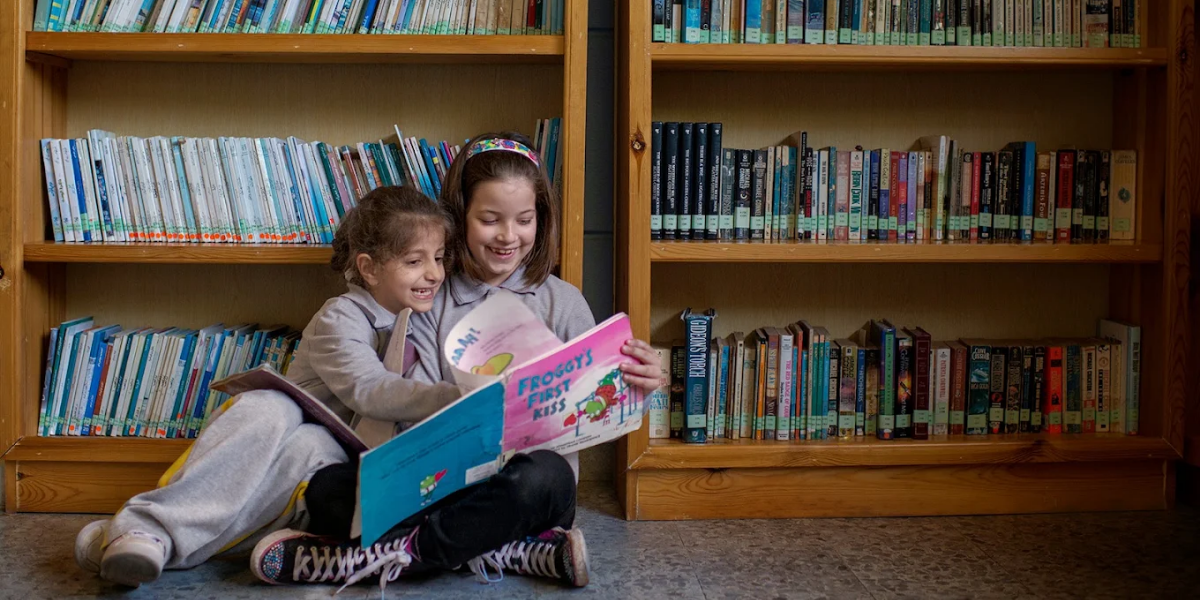
The PYP program is designed for children aged 3 to 12. It uses an inquiry-based, concept-driven and transdisciplinary approach to learning. Subjects still have an important place, but students are encouraged to explore ideas and real-world issues across traditional subject boundaries.
For parents considering an IB school in Beirut, this approach can feel different from a classroom built mainly around textbooks, memorization and isolated subject lessons.
How the IB PYP Program Works
Within the IB PYP program, students explore broad transdisciplinary themes that help connect knowledge across different areas of learning. They are encouraged to question, investigate, reflect and take meaningful action based on what they discover.
The PYP framework includes six transdisciplinary themes:
Who we are
Where we are in place and time
How we express ourselves
How the world works
How we organize ourselves
Sharing the planet
These themes give teachers and students room to examine ideas from several perspectives while developing knowledge, concepts and learning skills.
What This Stage Can Develop
During these early years, children gradually become active participants in their own learning. They practice asking useful questions, explaining their thinking, collaborating with classmates and reflecting on what they have learned.
Eastwood offers its PYP across the early learning and elementary years, with English and French PYP pathways available.
The Middle Years Program: Connecting Learning With Real Life
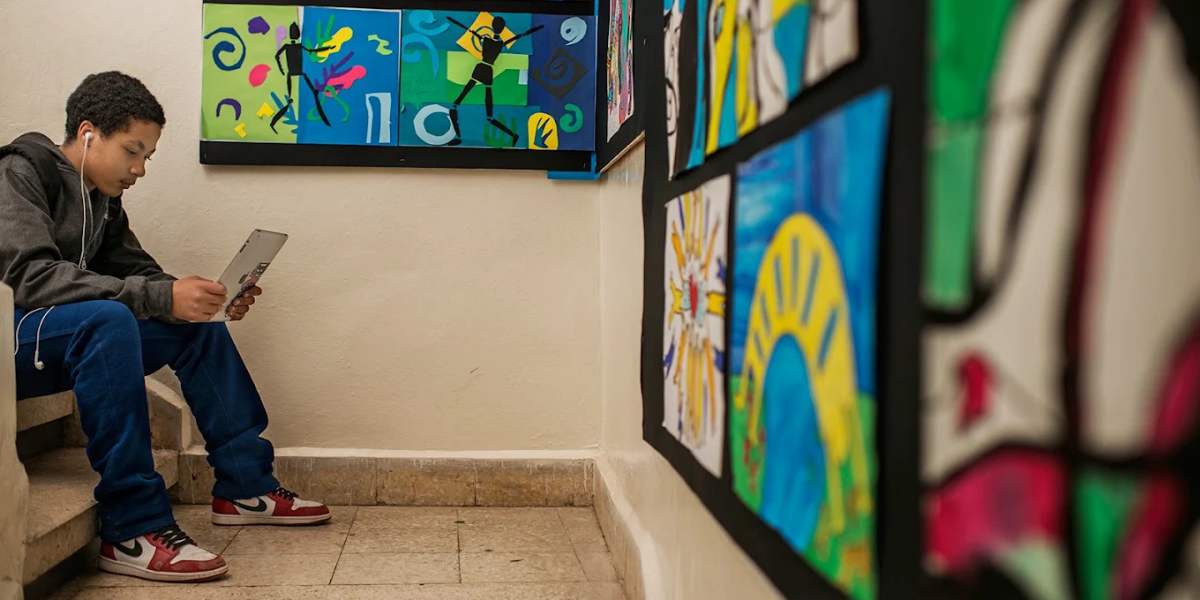
The MYP program is designed for students aged 11 to 16. This stage arrives at a time when students are becoming increasingly independent and are beginning to examine subjects, ideas and personal interests in greater depth.
The IB MYP program places strong emphasis on conceptual understanding and connections between classroom learning and the wider world. At Eastwood, the MYP runs from Grades 6 through 10.
What Students Study in the IB MYP Program
The official MYP curriculum is organized around eight subject groups:
Language and literature
Language acquisition
Individuals and societies
Sciences
Mathematics
Arts
Physical and health education
Design
The program also incorporates interdisciplinary learning, allowing students to bring knowledge and skills from different subjects together when exploring an issue or completing a learning experience.
Developing Independent Learning Habits
The IB MYP program asks students to become increasingly responsible for how they learn. Research, communication, organization, reflection and critical thinking become important parts of everyday academic life.
Students also complete a long-term personal project as part of the MYP. The project gives them an opportunity to choose an area of interest, identify what they need to learn and work independently towards a defined outcome.
For families considering IB education, this stage can be especially important because students begin preparing for the greater independence expected during their final years of school.
The Diploma Program: Preparing for the Next Academic Step

The Diploma Program is for students aged between 16 and 19 years and is widely used as a pre-university educational pathway. At Eastwood, the IB DP is available to students in Grades 11 and 12.
Students entering an IB Diploma Program face greater academic depth, independent research and responsibility for managing several areas of study at the same time.
How the IB Diploma Program Is Structured
The DP curriculum contains six subject groups alongside three required core components. The core consists of:
Theory of Knowledge (TOK), which asks students to examine how knowledge is formed and understood
The Extended Essay, an independent research project culminating in a 4,000-word paper
Creativity, Activity, Service (CAS), which involves experiences across those three areas
Together, these elements encourage students to think beyond individual subjects and develop skills connected with research, reflection and independent study.
Moving Towards University-Level Learning
The demands of the DP introduce students to forms of academic work they are likely to encounter after secondary school. They must balance subject requirements, deadlines, research and independent tasks while learning to evaluate information carefully.
For parents researching an international school in Beirut, it is worth looking beyond the name of the diploma and asking how students are prepared for the workload, subject selection and transition to university.
Why the Continuum Can Matter to Families
A major advantage of an IB Continuum School is familiarity with a connected educational approach across several stages of schooling.
Students still encounter new teachers, subjects and academic expectations as they grow, but many of the underlying learning habits remain recognizable.
A Smoother Academic Progression
A student moving from PYP into the IB MYP program already has experience with inquiry, reflection and taking an active role in learning. During the MYP, those habits become increasingly structured and independent.
When the student later enters the IB Diploma Program, research and self-management are familiar concepts rather than completely new expectations.
Skills That Develop Over Time
A connected approach gives students repeated opportunities to practice important learning behaviors throughout their school years. Depending on the program and age, these can include:
Critical and creative thinking
Communication
Research
Collaboration
Reflection
Organization and self-management
Connecting learning with real situations
These skills are developed progressively rather than introduced at a single stage.
Continuity With Room for Different Pathways
Families should also consider whether a school offers appropriate choices as students approach secondary graduation.
Eastwood International School offers the IB Diploma Program alongside American High School and Lebanese program pathways. Eligibility and requirements differ between programs, so families should discuss the most appropriate route based on a student’s academic plans and circumstances.
Choosing an IB School in Beirut
Curriculum is one part of a school decision. Parents comparing an IB school in Beirut should also consider how the programs are delivered, what languages are available, how students are supported during transitions and what pathways are offered during the secondary years.
Questions Parents Can Ask
When visiting an international school in Beirut, useful questions include:
Which IB programs is the school authorized to offer?
How does the school support students moving from PYP to MYP?
How are students prepared for the Diploma Program?
Which languages are available at each stage?
What guidance is provided when students choose secondary pathways and subjects?
How does the school support students who transfer from another curriculum?
These questions can reveal how the curriculum works in daily school life, rather than focusing solely on program names.
Finding the Right IB Pathway for Your Child
Choosing an IB Continuum School gives families the opportunity to consider a child’s education as a connected journey from the early years through secondary school. PYP encourages curiosity and inquiry, MYP develops deeper conceptual thinking and independence, and DP introduces the academic depth and research skills associated with pre-university study.
For families looking for an IB school in Beirut, the useful question is how well the program, language pathway, school environment and future options fit the individual student.
Explore the IB Continuum at Eastwood
Eastwood International School offers the PYP, MYP and DP as an authorized IB Continuum World School, alongside additional secondary pathways for eligible students.
If you are considering an international school in Beirut and would like to understand which program may suit your child’s age, learning needs and future plans, contact us to speak with the Eastwood International School admissions team.
Frequently Asked Questions
What is an IB Continuum School?
An IB Continuum School is an IB World School authorized to offer multiple International Baccalaureate programs across different stages of education. A school offering PYP, MYP and DP can provide a connected pathway from the primary years through pre-university education.
What ages are PYP, MYP and DP designed for?
The IB defines the PYP for students aged 3 to 12, the MYP for ages 11 to 16 and the DP for ages 16 to 19. The age ranges intentionally overlap at transition points because schools organize programs according to their own grade structures within IB requirements.
Does a student need to complete PYP and MYP before entering the Diploma Program?
Previous PYP or MYP experience can help students become familiar with IB approaches, but completion of those programs is not presented by the IB as a universal prerequisite for entering the DP. Admission requirements are determined by individual schools, so parents should discuss eligibility and preparation directly with the school.
What is the difference between PYP, MYP and DP?
The IB PYP program focuses on inquiry and transdisciplinary learning during the primary years. The IB MYP program develops conceptual understanding, interdisciplinary connections and independent learning during adolescence. The IB Diploma Program is a two-year pre-university program built around six subject groups and the DP core.